
The Wild Skeena River of 1936
by Charles LeRoss
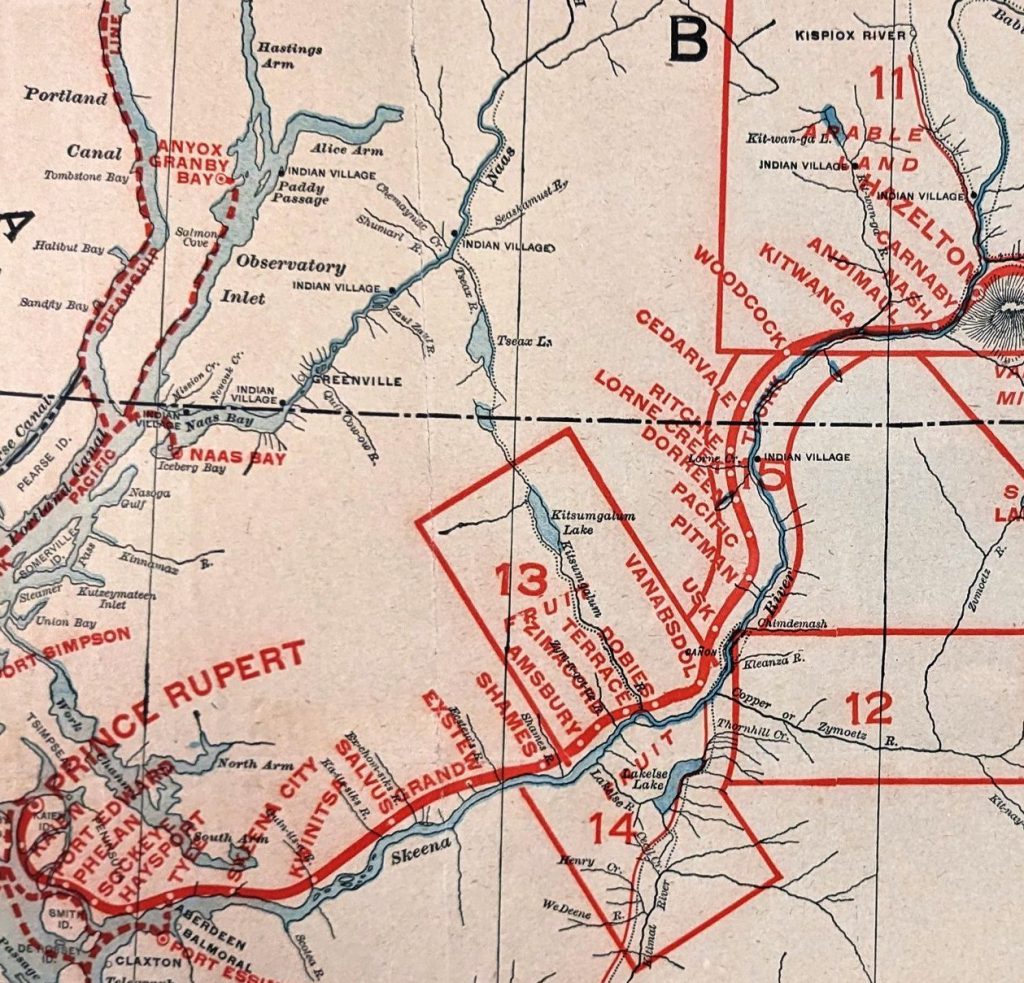
In the spring of 1936, after a week of 90° F. (32° C.) temperatures, the Skeena River rose well past the typical spring runoff and burst its banks. Most communities from Kispiox, north of Hazelton to the rail flag stop at Kwinitsa were inundated with the rising river water. Houses and businesses were washed away, and homes were filled with dirty brown siltladen water.
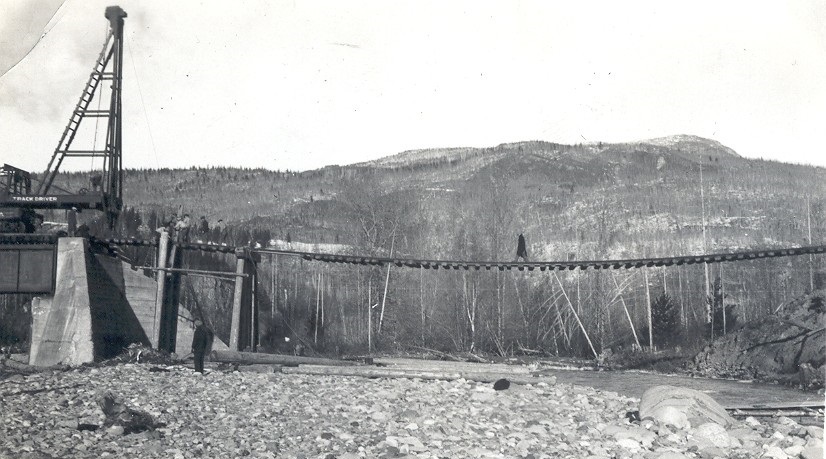
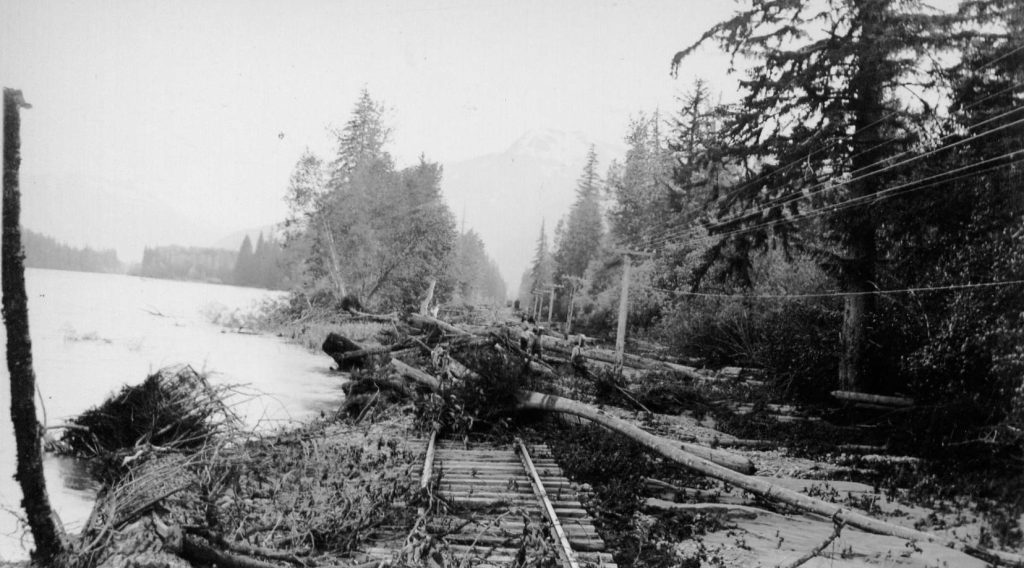
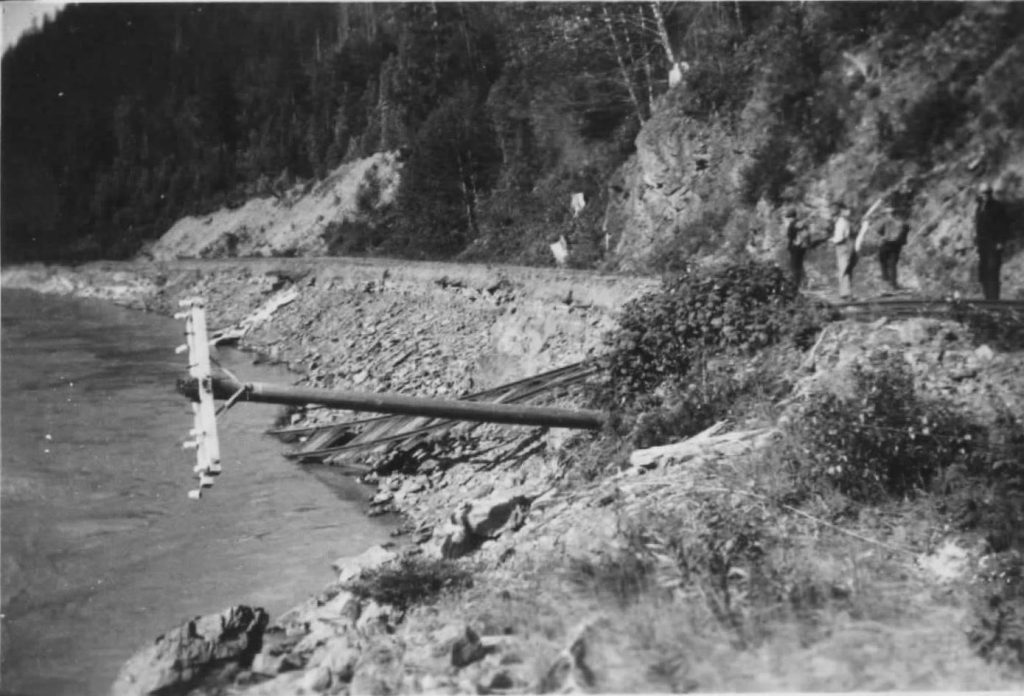
In long sections, the CN Railway was covered with water, if not washed away. Numerous rail bridges across the tributary streams of the Skeena were washed away or bi-passed by the tributaries with sections of track hanging in the air.

Attached is a photo of some children (two of which are my Aunts) at Pacific, standing beside a basketball hoop. If the basketball hoop in this photo is the regulation height of 10 feet(3.048 meters), then the children are standing on at least 5 feet (1.5024 meters) of snow. One has to assume the same level of snow is in the surrounding mountains, and will come down in the spring. If this picture was taken in the winter of 1935-36, it would explain part of the reason for the extreme runoff that came in the spring. Floyd Frank, a pioneer of Terrace says, however, the snow pack in the Skeena watershed was normal that year, that it was the sudden, very hot weather from around the 24th of May that caused the serious flooding.
In 1936, there was no highway between Hazelton and Prince Rupert. The only means of travel was by boat on the Skeena River or by CNR passenger train. The only communication was by telephone and telegraph lines, and those lines were all knocked out by the flooding river.
On May 30, the Skeena River was rising rapidly as a result of the sudden hot weather. Hazelton and Terrace reported temperatures in the 90’s F. Telegraph lines were experiencing trouble and while phoning to Prince Rupert, the postmaster at Usk, said that he was standing in two feet of water as he talked. The regular train due from the east at 10:20 pm into Prince Rupert, was reported still on time although the track was under water at certain points. On June 1, all train traffic had stopped between Smithers and Prince Rupert. Numerous culverts and bridges of tributaries of the Skeena were washed away, the most affected area being between Kitwanga and Kwinitsa.
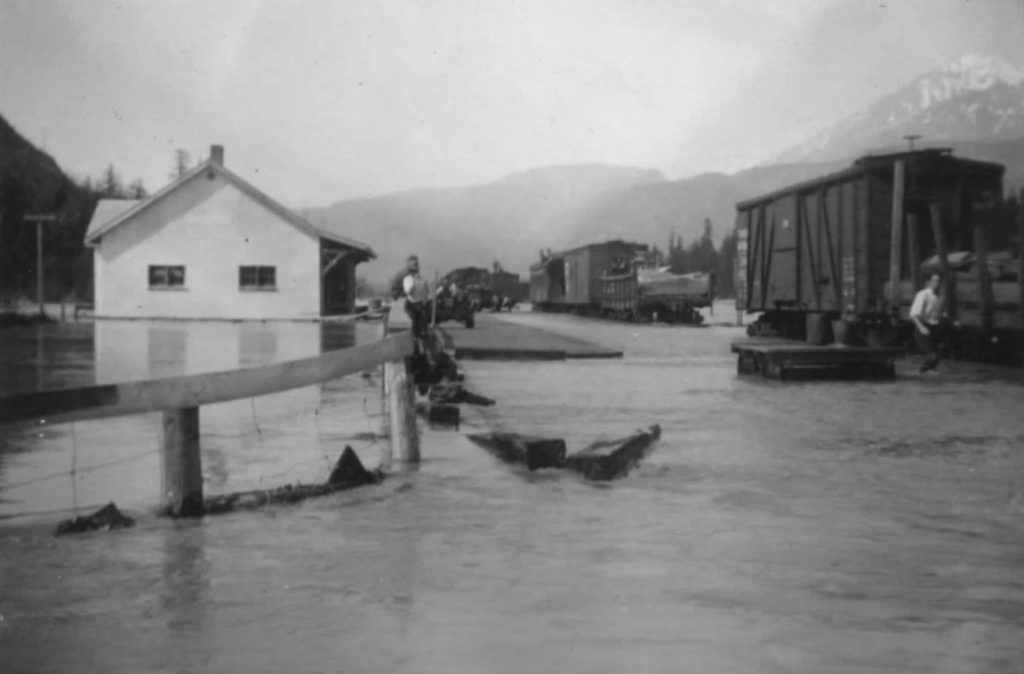
Photo by Pierre L. LeRoss Jr.
Small communities along the River were very hard hit and under water. The villages of Glen Vowell and Kispiox, north of Hazelton lost 26 homes that were washed down the river. Totem poles were observed floating down the river. A continuous stream of large trees and logs cascaded down the river at an estimated speed of 15-20 miles an hour, endangering buildings along the river. The high water eroded river banks causing further flooding away from the river. On June 1, the Skeena was flowing down the streets of Hazelton. At Hazelton Jim Hodder lost six small houses he had built for bachelor tenants. The old Hudson’s Bay stone house, a landmark on the bank of the Skeena and probably the oldest building in that part of the country was lost. Riverside buildings were all evacuated and buildings were washed away.
At Kitwanga, the village was flooded deeply and the water tank and pump house were washed away. On June 3 Sergeant Cline of the Provincial Police reported that “At Kitwanga, very little damage has been done by the flood”.
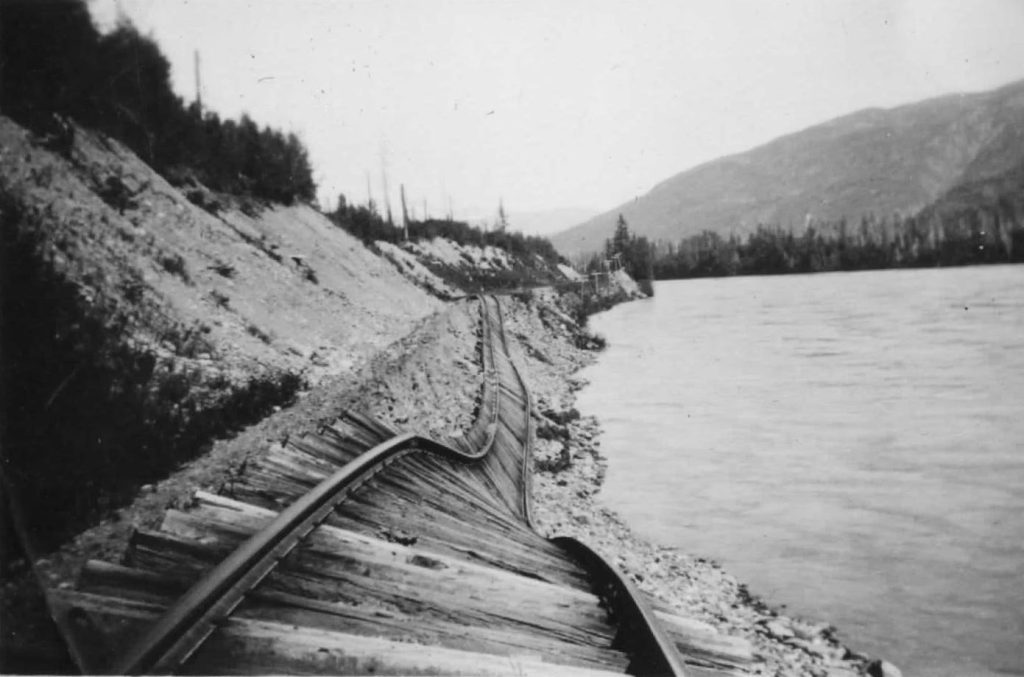
Photo by Pierre L. LeRoss Jr.
Further downstream at Pacific, a small community and divisional point on the CN railway east of Terrace was inundated with high water. On Tuesday June 2, retired riverman Ein Boden of South Hazelton resurrected his large freighting canoe, and left at noon with a ton of freight for Pacific. Ein had operated the large canoe on the Skeena. He continued to help Pacific by moving supplies from Kitwanga to Pacific, together with three young Indians who knew how to operate a boat on the river. Most of the pictures here of Pacific were taken by my father, Pierre LeRoss Jr., who was a young 20 year old living in Pacific at the time. His father Pierre LeRoss Sr. was the CNR Section Foreman there. As you can see from the pictures, Pacific was completely flooded, but limited damage was done to the buildings. A few people lost their homes but were able to move into spare rail coaches.

Photo by Pierre L. LeRoss Jr.
At its peak, the river flowed through the windows of the railway station at Usk, a small community east of Terrace. Many homes at Usk were filled with river silt and mud. One reason Usk was flooded so badly was because it was upstream from Kitselas Canyon and the narrow canyon caused the water to back up behind the canyon, causing worse flooding. 300 feet of rail line was washed out at Usk, and the telegraph station was not reachable. Some residents of Usk stated that on Monday night, June 1, they observed two men clinging to the roof of a house that passed down river. The house would have eventually gone into Kitselas Canyon where it would have broken up. This story was never confirmed by the police, and the identity of the men is unknown.
The Provincial Police radio service was used during the flood for emergency or urgent communication with the outside.
“Mrs. Fred Thomas of Terrace recalls that year well because she left during high water to have her baby in Smithers Hospital. The night and early morning of the 31st of May, when her daughter was born, the telegraph, telephone and rail lines were all washed out. To advise her husband of his fatherhood, the birth notice was sent to CBC, Vancouver and announced on the 10 p.m. news from there.”
Ted Johnston and John Normandeau were down at Braun’s Island and went out in a row boat to check various buildings for livestock. They found a calf floating on a pole floor, and after hog tying it, brought it to safety.
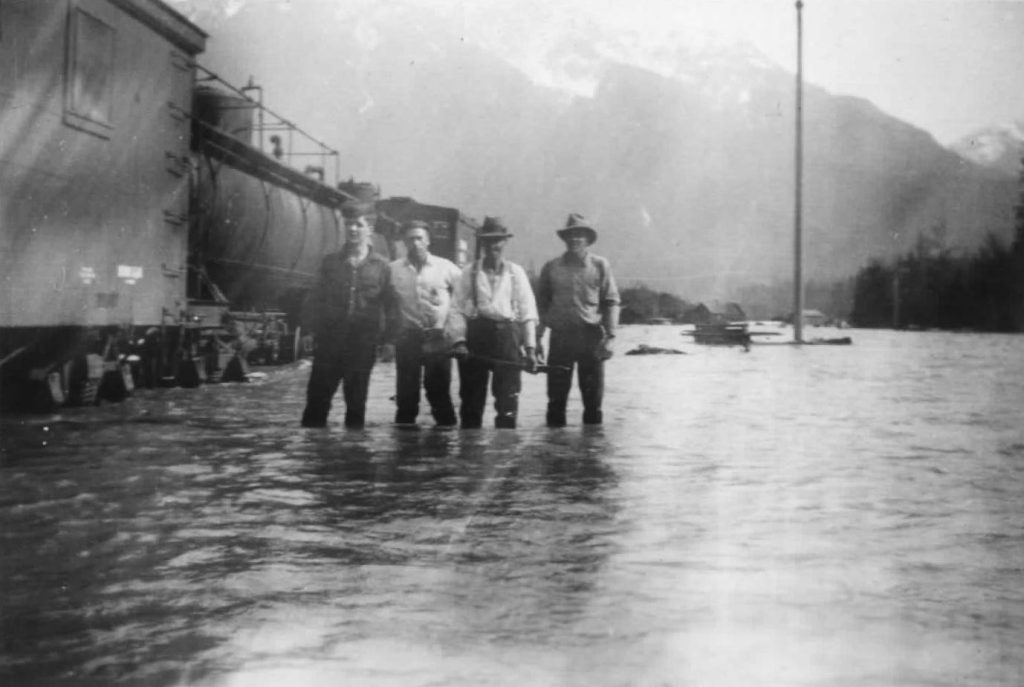
Photo by Pierre L. LeRoss Jr.
“200 feet of the southern Skeena Bridge deck at Terrace was washed away. The river was just 4 feet below the bridge. Water was hitting the concrete piers and sprayed onlookers.” William Reid, a CNR Electrician on return to his home in Prince Rupert, reported that everything on Braun’s Island, including houses, horses and cattle had been carried away by the river. He also said every house at Remo was gone. He paid high tribute to E. T. Kenney, M.L.A. for his leadership and initiative in taking charge of relief efforts at Terrace.
“Perhaps the most thrilling incident of the week was the rescue made by George Wright early Sunday morning of his family from the roof of a floating hen house.
The Wrights found themselves trapped on Ferry Island on Saturday and later that afternoon Mr Wright made the mainland in a row boat. His wife, a one day old baby and other members of the family, were left on the island. George got to Vanarsdol and there secured the use of a gas boat. On his return he had to run the raging torrents of the little canyon and by the time he reached his family it was too late to complete the rescue, he had to wait for daylight on Sunday. The mother and baby and the rest of the family spent the dark hours on the roof of a floating hen house and on Sunday George got all the family safely over to Lakelse Valley.(Thornhill)” The island was eventually covered in 5 feet of water.

A call for help was sent out from Salvus, a railway flag stop 50 miles from Prince Rupert just before contact by telegraph was lost. Railway workers there were marooned on the top of rail cars after the flood waters entered the rail cars in which they were living. In an attempt to get to Salvus to assist these stranded workers, Doug Frizzell started out from Kwinitsa in a speedboat, but his boat upset in the turbulent Skeena and he was thrown into the river with no ill-effects. As you can see from the accompanying photos, the damage to the CN railway was extensive. 1200 feet of rail line at Salvus was washed out.
And at Kwinitsa, Jim Donaldson, a sawmill operator, who operated a tug on the Skeena was feeling rambunctious during the flood — “On a dare, I took down the mast on my tug, it was the 48 ft. “Billmor” which drew 5.5 ft of water—and ran it through the snow shed at Mile 54 on the CNR—there was 7 ft of water on the tracks!” All the track on the river flats along the river at Remo, Shames, Exstew, Salvus and Kwinitsa were washed out or under water.
McCubbin Collection
On June 3, 1936 the Skeena River was starting to recede, but the damage was done and it would be weeks before the rail line was repaired. The only transportation available were boats on the river. At the time there were approximately 1200 people living between Kitwanga and Kwinitsa. Authorities were trying to figure out ways to get emergency supplies up the river from Prince Rupert. O. T. Sundal a business man from Terrace brought his boat the Hilgute from Lakelse Lake to the Skeena and started making trips down the river with passengers and returning with supplies. At a certain point the rail line was usable up to Kwinitsa and supplies were brought to there and sent by small craft up the river to many points as far as Terrace. After some minor washouts near Smithers were repaired, a local train was able to take needed supplies up to Kitwanga on June 3. Gordon Temple, owner of the Skeena Hotel built a boat that allowed him to run to Prince Rupert and pick up needed supplies of beer for his hotel. “Business before Pleasure” agreed the townsfolk and dubbed the boat the “Pilsner Princess”. Volunteers from Terrace, assisted the by refugees from Usk, went there and helped clean out homes that were filled with dirt and sand. Chief George Wright, a tugboat operator on the river bucked his way up the river past the little canyon under the Skeena River bridge at Terrace, to tow some logs from Vanarsdol that were needed to begin re-construction of the railway. Travelling to Kwinitsa by train, Provincial Policeman Corporal H. Caybone and Game Warden E. Martin from Prince Rupert made trips up the river in a flat bottom boat with an outboard motor. They carried provisions to the many settlers along the river as far as Terrace.
“The river was like something gone wild. The waves were like galloping horses rushing down the swollen water.”
Floyd Frank – My Valley’s Yesteryears.
Ed Hodkins farm at Cedarvale reported 6 feet of sand on his crops.
On June 4 the telegraph line between Terrace and Stewart had been restored, giving communication access to the outside.
Around June 11, the canneries on the coast started to organize the train transport of 700 men, women and children from Kitwanga, Hazelton and other communities to the mouth of the Skeena River. They were essential to the operation of the canneries. They had to travel 1500 miles to go to a place 150 miles away. They travelled down to Kamloops and then on to Vancouver where they were put on coastal steamers up to the mouth of the Skeena. It was estimated to cost $15,000 to move the people to the canneries.
By June 8th, the river level had dropped to where the rail bed between Kitwanga and Kwinitsa could be examined. F. S. Walton, the CNR roadmaster reported to CNR Superintendent W. H. Tobey that conditions were very bad. He reported numerous washouts of various kinds, with damage to the line as very extensive.
On June 1, telegraph service from the east into Pacific was re-established, and on June 15, telegraph service to Prince Rupert was complete.
McCubbins Collection
On June 10, C.L.M. Giggey, a sawmill operator from Terrace, made a trip down the Skeena to Kwinitsa, carrying 3 passengers, Peter Lakie, CNR division freight and passenger agent, and F. Henderson and W. V. Stevens, two Vancouver businessmen. He returned up stream with urgent supplies and mail for Terrace. He was still making these trips in his flat bottom boat on June 20.
On June 26, Pilots William Holland and Charles Elliott flew into Lakelse Lake on a Junkers seaplane, with 1200 pounds of provisions for delivery to Terrace.
On July 14 the first train left Prince Rupert and was able to get as far as Pacific. Several days later through traffic was able to go to Jasper.
In his book “Whitewater Men of the Skeena”, Wiggs O’Neill says the 1936 flood was a baby compared to the flood of 1894.
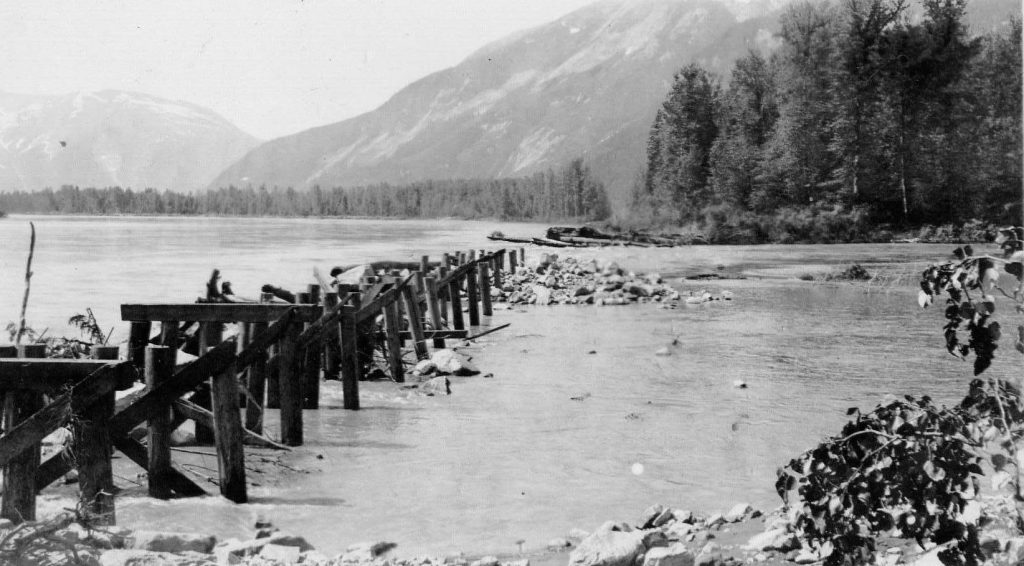
Photo from McCubbin Collection
SOURCES:
Asante, Nadine; The History of Terrace, Terrace Public Library Association, 1972.
Bowman, Phylis; Klondike of the Skeena, 1982
Frank, Floyd; My Valley’s Yesteryears, Orca Book Publishers, Victoria BC, 1991
Johnston, Ted; Memoirs-Terrace Area Pioneers, The “Ted” Johnston Story, compiled by Chris Harrison
McCubbin, Ruth; Pioneers of Pacific, BC, Unpublished, BC Archives circa 1981
O’Neill, Wiggs; Whitewater Men of the Skeena, Northern Sentinel Press, Kitimat, 1960
The Omineca Herald, New Hazelton BC
The Vancouver Daily Province
The Vancouver Sun
Victoria Daily Times
Prince Rupert Daily News
◀
