
The Amazing Captain William Moore
from the book Captain William Moore, B.C.’s Amazing Frontiersman
by Norman Hacking
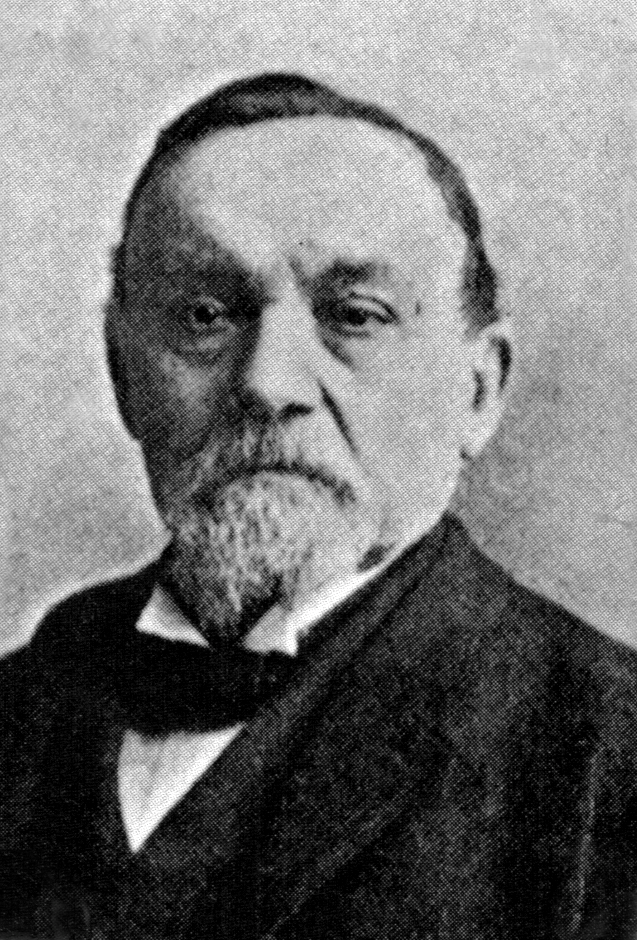
Courtesy the book Captain William Moore by Norman Hacking
In his great booklet on the life of Captain William Moore, Norman Hacking1, outlines Moore’s colorful and adventurous life. On the cover of the book, he is described as “B.C.’s Amazing Frontiersman.” This is not overstated.
One of the amazing things Captain Moore did was on the Skeena River. In the winter of 1871, Moore had a contract with the Hudson’s Bay Company to transport supplies up the Skeena the following year. He left Victoria in March 1872 on board the coastal steamer Otter and traveled to Port Essington:
“Here Captain Moore hired some extra men and started to build two barges of 15 tons capacity, each suitable for freighting up the river. When they were completed, he hired 12 natives to man each barge and 12 more to handle two large canoes. The captain was in charge of the lead barge; Johnnie (Moore’s son), the second; while Billie (Moore’s son) brought up the rear in the canoes.
‘On reaching the Kitselas canyon,’ Billie later wrote, ‘long lines were passed from the leading barge to the other barge, and to the canoes trailing behind, all in line. A long rope was taken ashore and anchored as far ahead as it would reach. The first barge had a capstan installation, with which to pull the barges through the rapids and canyons. When the first barge had been pulled up as far as possible it would be anchored to the shore, the other barges and canoes pulled up to this point; then the line would be taken ahead, and the process repeated until the barges and canoes had all passed through the canyon. This procedure was necessary many times before we had completed the trip up the Skeena. There were stretches where the current was not so swift, and then we would tow the barge with shore lines.’
“A short distance above Kitselas they were met by a canoe with Tom Hankin aboard. He warned them that the Indians at Kitsequekla – a tribe called the Sticks – were hostile and that several shots had been fired upon him as he passed through the canyon. Earlier some careless miners had accidentally burned down the Indians’ winter village and the tribesmen were out for vengeance.
Despite this warning, Moore and his sons decided to continue on their way. On their arrival at Kitsequekla Canyon they saw 60 or 70 natives sitting with their blankets around them, not a woman or child in sight. Moore’s coast natives, who were composed of Haida, Tongass and Tsimpseans, warned him that he and his sons were liable to get killed, and so were they since the Sticks didn’t like the coast natives either.
Moore told his crew that they must stand by him, and that the Hudson’s Bay Company would pay them to take care of their goods. The natives said they could do nothing without guns, so Moore ordered them to open four cases of muskets and ammunition and arm themselves. In addition, Moore and his sons had two Henry rifles and two revolvers. When they got abreast of the village, two natives said: ‘We will not let you go up unless you pay.’
Moore answered that he could not since the goods didn’t belong to him, but that he was sure the government would pay for their lost village.
The Sticks answered: ‘If you try to go farther we will fight.’
Moore warned them that if they harmed him or his crew, three of their chiefs who had gone to the coast would not be allowed to return. He then ordered his crew to proceed. During the two days it took to heave the barges through the canyon armed Sticks watched them, but the threat of reprisal kept the natives from attacking.
Despite the threat, the flotilla arrived at Hazelton with the goods intact. The mules were in good shape and were quickly loaded with freight and started over the Babine trail in charge of Johnnie. Then Captain Moore and his two younger sons returned down the Skeena for another load. As they passed through Kitsequekla several shots were fired at them, one hitting the leg of a crew member. Another struck the steering oar six inches from Captain Moore’s hand. One of the crew grabbed Moore’s rifle and fired several shots in return but since the river was rising very rapidly because of the spring freshet, it took all their attention to manage the barges.
On their arrival at the mouth of the river they found that the Government, hearing of the Indian trouble, had sent up a gunboat – HMS Scout – with Lieutenant-Governor J. W. Trutch. He met the chiefs from the Stick tribe, explained that their misfortune was the result of an accident, and distributed $600 as recompense.
The next trip up the river Captain Moore observed that there was not a native in sight at Kitsequekla. They had heard of the man-of-war at Port Essington and had taken their families back into the woods. After the chiefs returned to their homes there were no more threats. Captain Moore made three trips to Hazelton that season.“
You can find other amazing stories about the life of Captain William Moore, in the book referenced below.
- Norman Hacking was the marine editor of the Vancouver Province for 30 years. He was no slouch himself about getting out on an adventure or two. Read a summary his life here. ↩︎
SOURCE:
Norman Hacking, Captain William Moore, B.C.’s Amazing Frontiersman, Surrey: Heritage House Publishing Company Ltd., 1993.
◀
