
The Collins Overland Telegraph Company, 1866
The following is an extract from a longer narrative history of early British Columbia by Charles Frederic Morison – telling of his life in British Columbia between 1862 and 1876.
By Charles F. Morison
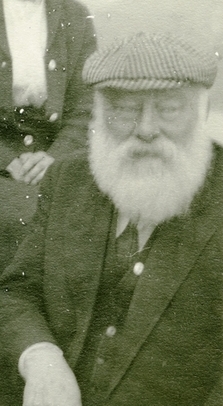
In May 1866 I was working with a friend of mine, Arthur Bullock, who was doing a roaring business; but the hours were fearfully long, sixteen hours a day, and snatch meals when possible. The strain overtaxed my health and body; being quite young I sought pastures new and entered the service of the Collins Overland Telegraph Company. My experiences with that company I shall describe in further detail.
For several years unsuccessful attempts had been made to lay a telegraph cable across the Atlantic Ocean from Europe to North America; finally the Western Union Telegraph Company of New York conceived the idea of stringing a telegraph line across North America, thence through British Columbia from the southern portion, and north from Quesnel to the vicinity of the present town of Hazelton and on to Telegraph Creek on the Stikine River, thence through Russian Alaska, across the Bering Sea, through Asia, and finally to Paris, London and other European cities. A stupendous idea, and a still more stupendous undertaking.
The Telegraph Company was commencing work. The Chief Executives made a request to the British Columbia Government stating: That as they intended making a large expenditure in B. C., they asked to be allowed to import from the United States all materials actually used in the construction of the telegraph line, also to include provisions and medical supplies, all these items to be free of duty and other imposts. It had been reported in many quarters the Company intended bringing in all labor from San Francisco, they could procure this labor at low rates of pay, it was also reported this labor would be derived from and extremely low grade of population, a class not desired in British Columbia. Also if the labor importation was allowed it would deprive work for B. C. men at a time when jobs were scarce.
The reply from the Government was wise; they would grant the request of the Company to forego charges of duty and imposts on general construction supplies, but on the condition, they hired their labor in British Columbia, and when possible to give employment to as many Indians as possible. Terms were agreeable to both parties concerned, and the great work, for great it was, was proceeded with.
One large party traveled up the Fraser River to Quesnel, and were then to strike across country in a north westerly direction to a point near the confluence of the Skeena and Bulkley Rivers. The Indian name of the latter river was “Watsonquah” but was changed to the white name in honor of Colonel Charles S. Bulkley who was in charge of the entire Collins project. The junction of these two rivers was in the direct proximity of old Hazelton and the village of Hagwilget, the latter being well populated in 1866; these natives were part of the Bulkley River Carrier Indians.
The other party was to start from New Westminster and follow the Northwest coast of British Columbia in a northwesterly direction until they reached the mouth of the Skeena, between five and six hundred miles distant, the voyage to be made by sternwheeler. From the mouth of the river they would follow the Skeena until they reached the “Forks” of the Skeena and Bulkley Rivers where they would join with the overland party from Quesnel.
The northern coastal waters were very little known except to Hudson’s Bay Company navigators and officials and illicit whiskey traders on small schooners, there men plied their nefarious trade among the Indian inhabitants of the coast.
I joined the coastal party through their agent Mr. Pitman at their New Westminster headquarters. Other members of the party were:- E. Conway, Engineer in charge of all works, Charles Burrage-Paymaster, Mr. Lugenbeel-Chief Bookkeeper, and our never to be forgotten Surgeon Dr. George Chismore my bosom friend, who in later years became a leading surgeon of San Francisco. Directly in charge of the party was Captain James L. Butler, a splendid type for the job which he well proved as time went on; his Accountant was R. W. Brown of New Westminster, formerly Color-Sergeant to the London Irish Rifles; your humble servant – Commissary Clerk; and to round out the crew-forty construction and utility men; some were fine chaps, a few were rather tough, but all splendid workers. (1920 – I imagine I am the lone survivor of the party).
THE STERNWHEELER, MUMFORD
To transport men and supplies up the Skeena River to Mission Point (junction Skeena & Bulkley Rivers) between 160 and 180 miles, the company decided to use a stern-wheel river boat.
The proposed Master of the vessel, Captain Tom Coffin, a fine white water man, had in 1864 investigated the turbulent waters of the Skeena in a small sternwheeler, the “UNION”; incidentally the first steam powered vessel ever to enter that river. Capt. Coffin had drawn plans for a sternwheel boat of very light draft suitable for the rapid Skeena. These plans were submitted to the Directors in New York. Quite naturally the Directors had not the faintest conception of the build and other particulars of a British Columbia river boat. They would not accept under any conditions the plans tendered by experienced Capt. Coffin; instead they called in a New York marine architect to draft plans and design a sternwheel river boat for the swift water of B.C. The architect, of course had no idea of the baffling, shallow, and swift and treacherous Skeena. These opinions of the Captain were forwarded to New York, to which the answer came:- “Build a boat according to the plans sent you!”. The ultimatum was accepted. She was constructed according to the orders from headquarters, and proved a dismal failure in rapid and shallow waters. She was completed in detail at Victoria, and christened the “MUMFORD”; one of the directorate in New York bears that name. Upon completion she left for New Westminster where she arrived the 2nd July 1866. The loading of supplies, etc., for the expedition was commenced immediately. It was here the writer joined her.
AN INCIDENT OFF RECORD
Lying at the wharf was the SS “GEORGE S. WRIGHT” from San Francisco with supplies for our Company. One of her crew had committed some breach of duty, for which misdemeanor the Captain, a specimen of the tough American type, ordered him tied up in the rigging suspended by his thumbs with his toes barely touching the deck; a most painful position to say the least of it. This action on the part of the Captain raised the ire of the citizens, a large number of whom went to the wharf and requested he be cut down, this the Captain most decidedly refused to do in language more forcible than polite. Old Captain Irving marshaled his sternwheeler crew to take action, there was a serious disturbance pending when Mr. Burch, Colonial Secretary, arrived on the scene; he proceeded aboard the vessel and informed the Captain the method he had employed was not tolerated under the Union Jack! Better counsel prevailed and the man in an exhausted condition was cut down. The Captain of the American ship, not liking the threatening appearance of the crowd, pulled away from the dock and anchored in the steam until his departure next day.
MUMFORD UP THE COAST
Captain Butler was anxious to get away on the 3rd July as the season was getting along. Besides he knew well the next day being the ‘glorious’ Fourth of July, he would be unable to accomplish anything with his crew. So the loading went on enabling us to sail the 3rd July.
I might mention here we all had to sign very strict articles, which were no “paper” articles, for they were most strictly adhered to and carried out. We were not allowed to trade with the Indians or interfere with them in any manner whatsoever. The articles were identical for the Chief Engineer down to the cook. So behold us embarking on our voyage! Many of us – the writer included – had no knowledge of where the Skeena River was; I for one, and many others had never heard of it. Times Change!
THE VOYAGE, SUMMER 1866
On July 3, 1866, the loading of men and supplies was completed; and that evening, under command of Capt. Coffin, we set sail from New Westminster for, to most of us, parts unknown. Forty construction and utility men were aboard.
We were under the charge of Captain Butler, (aforementioned). We had a fine trip up the coast; went through Seymour Narrows in flying style; called at Suquash, a coal mine below Fort Rupert long since deserted. There was no Alert Bay Mission or cannery those days; we then arrived at Fort Rupert, at that time a flourishing Hudson’s Bay Company Post under the charge of a Mr. Compton. We met him below the Fort returning from a hunting trip and towed his large canoe up to Fort Rupert. Leaving the Fort in the evening, we crossed Queen Charlotte Sound during the night; there was very little swell, which was fortunate for us as sternwheelers are by no means adapted for sea work, and as Captain Butler quaintly remarked, – “It was very like going to sea in a wheelbarrow!” We accomplished the crossing without incident and after passing Bella Bella we luckily struck a calm streak in Milbanke Sound.
During the course of the voyage we were obliged to anchor several times to go ashore and cut wood as the steamer, heavily loaded as she was, had very little room for fuel. The weather was fine and the scenery grand, but packing cordwood on your shoulder over a rocky beach to the ship was not grand.
The food was good, but the vessel had only sleeping accommodation for the ship’s company. We, the passengers had to pick a soft plank at night on which to spread out blankets, which also was not grand. With so many mouths to feed our supply of fresh beef soon gave out, and we fell back on bacon, salt horse, salt pork but as they were all excellent of their kind, we did not fare so badly. When we steamed through Grenville Channel, a deer was seen swimming across the channel. Capt. Coffin shot it from the pilot house; it certainly proved a welcome addition to our fare; although there was one man who would not touch it, as he said venison was not fit food for white men but only fit for Indians to eat. We left him to enjoy his salt horse in peace.
At the north end of Grenville Channel we made a sharp turn to starboard, and perceived that the water was becoming muddy in appearance. We were informed we had entered the mouth of our goal, the Skeena River. The ocean tide when flooding, backs up the river nearly forty miles above the present Port Essington.
At the head of tide water we encountered the full current of the river. We could make no headway so tied up to the river bank. The men built a rough warehouse in which half the cargo was stored.
FINAL ATTEMPT TO BEAT THE RAPIDS
The MUMFORD made one more effort to surmount a riffle. Captain Coffin wedged the safety valve down. We had a line ahead fastened to a tree which was heaved on by a hand-powered windlass. I was busy with a buck saw sawing short lengths of wood to feed the furnace. They heaved a five gallon tin of tar into the furnace, all the cook’s slush and several sides of fat bacon. The steam gauge had gone to “no man’s land’. The line ahead parted we gave up, dropped down stream several yards and tied up. The Chief Engineer knocked away the throttle lever, threw the fire overboard, and we were at peace.
The attempted ascent of the Skeena soon demonstrated the weaknesses of the MUMFORD. In spite of lightening the ship of more than half her cargo, we were unable to ascend further than the Kitsumkalem River. From thereon, the cargo for the upper river was trans-shipped to large Indian canoes. These canoes had a dead weight capacity of two tons and over.
So ended a coastal voyage by sternwheeler in July 1866. No beacons, light, buoys or properly detailed charts.
Capt. Butler proceeded down river and up the coast to the Hudson’s Bay Company Post at Fort Simpson (known now as Port Simpson) from whence he returned with a fleet of large canoes to be employed in freighting our supplies up the river.
The MUMFORD went down coast to New Westminster for another load of supplies which she brought to the mouth of the Skeena where it was picked up by the freight canoes and transported to Mission Point at the junction of the Skeena and Bulkley Rivers.
CANOES & FREIGHTING SKEENA RIVER, 1866
I made a couple of canoe trips as one of the crew, and I can truthfully state,- if you wish to realize hard work go freighting up the Skeena in a heavily laden canoe.
Note on canoes:- These canoes were magnificent craft hewed out of the body of a single red cedar tree by the Haida Indians of the Queen Charlotte Islands. Most of them had a capacity of over two tons dead weight cargo, manned by a crew of five,- the Captain who steered with a long sweep balanced over the stern, a bow man equipped with a pole and paddle, whom the crew tabbed “Captain Bow”. three other men who toggled on to a cotton rope tow line to haul her through the swift rushing current. The larger canoes also had space for three or four passengers. Marvelous craft!
The MUMFORD with half a cargo made another futile attempt on the river and landed the supplies at a camp we named Mumfords Landing, below the mouth of the Kitsumkalem River.
Captain Butler loaded his flotilla of canoes for the upriver trip and left me alone at the warehouse to act as watchman. I was entirely alone for fourteen days. I had neither watch nor clock and it rained incessantly, I completely lost track of time. My camp outfit consisted of one tin plate, one coffee pot, knife, fork and spoon, a supply of matches, a hatchet and a six-shooter. Sounds a bit like Robinson Crusoe doesn’t it! Of course there were plenty of provisions in the warehouse, but alas! they had neglected to leave me that “all-in-all” of camp life – a frying pan; to remedy this omission I cut a cleft stick which nicely held a tin plate, it made a good substitute. At night I placed my camp outfit in the doorway so the entrance of an intruder would create a clatter and waken me. One night I was aroused by a noise like a man moving amongst the freight, I challenged – “Who is there?” no answer, then I gave the warlike challenge- “Answer or I shoot!” when behold a large bush rat, the creator of the noise, bolted through the doorway; anticlimax – I rolled myself in my blankets and went to sleep feeling rather small after my martial ebullition.
The following day I was surprised at the return of all the Fort Simpson Indians with their canoes en route home. They had deserted Capt. Butler and were bound for Fort Simpson. One of the young men insulted me in an unmentionable manner, I retaliated with a powerful application of my boot on that portion of his anatomy ordained by Providence to receive such a salute, my well directed blow lifted the young man about two feet off the ground. The Indians proceeded home, and I must say to their credit they returned all the camp equipment before their departure. Their reason for this action: It appeared their leading man was awed by the magnitude of the work undertaken, and decided the whole concern was the private property of Captain Butler and he felt certain no single man would have enough money to pay or reimburse all the help hired. He reasoned that on completion of the work, they the natives would find themselves without work, and minus the wages due them. With this line of reasoning he persuaded all members of the fleet to decamp before they faced further ruin.
This turn of events did not seem to bother Captain Butler who definitely was not possessed of a panicky disposition. He left at once for the celebrated Church of England Mission Station- Metlakatla, at that date, 1866, the only and pioneer Christian Mission on the Northwest coast, conducted by the celebrated William Duncan.
At the request of Captain Butler, William Duncan assembled the people with their Headman, Paul Legaic (one of his first converts) to explain particulars of the work, the people were agreeable and a contract was speedily entered into with them to freight by canoe up the Skeena River for the duration of the freighting season. At the termination of the freighting Captain Butler would meet them with a chest full of money and pay them in cash for their work. This arrangement was carried out with satisfaction to both parties.
Captain Butler soon returned up river with his fleet; and I would like to state, these Metlakatla men and a few Kitselas relatives worked faithfully through out the season. The natives, in conjunction with about thirty five white men labored together very successfully. The white men with one or two exceptions, were trained Columbia River boatmen, and took the lead on the trips up river. Out head boat steerer was a man named Muller, and more betoken – a Prussian; he could neither read not write, but what he did not know about river boating was not worth knowing. He was an all around good fellow and captained the largest canoe manned by whites. John Mitchell in charge of the second canoe, an American and an honor to his country; Hickes a fine type of young Englishman, captained the third canoe. These three vessels were very large cedar canoes purchased at Fort Simpson for the white men’s work. Some of the men were as tough as they make them, but under a rough exterior, and sometime awful language there beat hearts of gold; they were all most kind to the “Boy” as they were pleased to call me. (Author was 22 years old) Their memory is ever green to me.
I must not forget in our company the young gentleman who had shipped out as cook in Victoria. He had professed to Captain Butler a thorough knowledge of cooking. Alas, when we arrived at the “Front” it was discovered his culinary knowledge was nil. His loaves of bread would have made perfect wadding for big guns; the rest of his cooking was in keeping. He was soon relieved and in exchange we got the colored cook from the MUMFORD, this man was an expert in his department; the men would not permit him to do any work in the boats, they simply petted him, in return he served them the best meals possible under the circumstances and conditions.
Before making the first passage of historic Kitselas Canyon, we tied up in the evening just below the canyon. Captain Butler judged it wise to make camp and tackle the turbulent waters next day. Most of the men were pretty well fagged out from a long hard day.
Shortly after supper while enjoying our “Otium cum dig”(ease with dignity) and listening to what he called music from the concertina of our friend Muller; a small canoe arrived down the river containing an envoy from KIT-HORN the Kitselas Chief with a message advising if we attempted the passage of the canyon, the tribe would heave rocks upon us from above (the canyon had high box walls) and sink our canoes. They labored under the delusion we were a great trading company and would ruin their trade with the upriver Indians, the latter not being allowed to pass through the canyon to the coast. A gift of pig-tail tobacco was tendered and a fill up of bacon and beans; then the Captain informed the messenger we were not a trading company, but were a working party, and far from interfering with their trade, would employ them and they would receive money from us for work they performed. Incidentally, the Captain ordered our arms chest to be opened, these contained a great display of Colt’s repeating rifles, Sharp’s carbines and revolvers. At the sight of this display the messenger’s eyes widened in wonderment and fear. Captain Butler finally informed him emphatically he would go through the canyon in any case, also when he delivered a statement he would live up to every word of it!
Next morning we continued the journey and reached the canyon. I should mention at this period – ‘1860’s, both sides of the canyon were lined with large Indian houses populated with about five hundred inhabitants. The rock walls were lined with Indians far above us; they rushed down, but instead of smashing or sinking us they tacked on to our towlines and drew us through the canyon in triumph accompanied with much yelling and shouting. They were of great assistance to us because in the month of July the river was at a very high stage. It took the whole day to get the entire flotilla through. We were most thankful to make camp that evening in a small and quiet bay at the head of the canyon. Following a hearty meal we all were soon asleep.
From this point I was placed in charge of a squadron of twenty-five Indian freight canoes. Rather an important charge for a young chap of twenty-two years. I endeavored to my utmost to merit the trust placed in me, and I believe I satisfied Captain Butler.
By this time we had got to really know our Chief. He expected every man to do his duty to the upmost, he never spared himself, was a fair and just man to both Indians and white men. As a consequence he was idolized by all.
I mentioned previously we were under the strictest orders not to interfere in any manner with the Indians. One of our men broke this rule and sneaked into a native village in the dead of night; he created a disturbance and was driven out. Next morning knowing nothing of the midnight episode we started out with our canoes; when lo and behold, we perceived the rocks lined with Indians armed with flintlock muskets; their spokesman demanded the man who had disturbed them during the night. Captain Butler ordered silence from his men, then asked the Indians to point out the offender which they promptly did; the offender confessed his fault and Captain Butler discharged him at once. This prompt action satisfied the Indians. We were obliged to take the culprit along with us upriver so as we could return him to the coast by the first return canoe. Unfortunately he was one of our prize boatmen, and to him his greatest punishment was the fact of him not being allowed to work; each time he touched a paddle, pole or towline – came the sharp order from Captain Butler- “Drop that, you are not in the employ of the company!” When we reached our destination, the offender approached Dr. Chismore a close friend of the Captain, and requested the Doctor to intercede for him. Butler relented and the man was reinstated. From that time forward you could not have found a steadier or better behaved man. After this incident the men would do anything in the world for Captain Butler or the Doctor.
LEFT IN CHARGE OF MISSION POINT DEPOT
I was behind the main fleet with my squadron and arrived at Mission Point after the others had unloaded their canoes. A rough log building had been constructed in which to stow the freight and supplies.
I may mention on this trip I had cut my foot badly on sharp stone just before retiring to rest. I had nothing to cover it with except a woolen sock and heavy boot; the cut festered and became intensely painful. When I arrived at the end of my journey I was done in for lack of sleep. I shook hands with Captain Butler, who remarked, “What is the matter with you my boy?, you look like a ghost and as though you had nothing to eat for a week, go to the cook and get filled up.” I went over and managed to eat a bit; then the Captain summoned me and asked me if I would remain in charge of the freight depot; of course this meant being left alone. Other men who had been approached on the subject had funked it because of the near proximity of the interior Indians who at that period were wild men. I replied I was quite willing to stay. His answer was,- “That’s the boy, when we go down river tomorrow we shall leave you alone!” When the men learned of my decision, their comforting remarks were,- “The Hagwilgets will capture you and eat you alive, then take the stores and supplies!” I thought differently because I had considerable experience before this with the Fraser River Indians. The entire party left early the next morning and I remained ‘solus’.
My foot was extremely painful, the gash being across the bottom directly under the ball of the foot. I got out my penknife, sharpened the small blade on a stone, took a bandage and salve from the medicine chest, limped down to the river and soaked my foot in the ice-cold water, then jabbed my knife into the swelling and cut it open; nearly a cupful of matter discharged and I obtained immediate relief. I applied salve, bandaged it up and experienced no more trouble. I continued soaking in the river constantly. I knew nothing of germs, microbes or blood poisoning in those early days. These luxuries came with the advent of civilization.
HAGWILGET INDIAN BRAVES
After the departure down river of men, boats and canoes I was to be alone until their return in two or three weeks time. Quite a responsibility for a lad of my age. Under my care and watching were many tons of provisions and general construction supplies.
I cook my lone supper the first evening, and feeling very tired I rolled into my blankets and off to sleep in the open air as the weather was beautiful and warm. Next morning I rose early and walked down to the river for my daily cold bath.
I had just finished breakfast when down came about a hundred Hagwilget Indians to survey the White boy and his camp. They were a fierce looking lot, not a pair of trousers among them, their faces painted red and black, and each carrying a Hudsons’s Bay Company flintlock musket and long knife. I think they were more curious than warlike. I sat on a stump smiling like a Chesire cat with all of them staring at me. We could not converse as none knew the language of the other. Then I was struck with a bright idea. I noticed an old man who appeared to be their Chief. I rose and approached him cap in hand, made a most polite bow, extended my hand to him and we shook most cordially. I then took a very large United States Army kettle, of which we had many, placed a quantity of rice in it, filled it with water and placed it on my camp fire to boil. I then poured in a couple of pannikins of molasses and stirred it with a long stick; I distributed tin plates and iron spoons amongst them, then a large helping and they enjoyed what to them was a glorious feast. They were my solid friends from then on. Their fierceness after all seemed to have been on the surface. At the same time I could not help but credit my self with a bit of diplomacy.
I had a few visitors every day, all men with the exception of one woman, the wife of the Chief. The other women of the tribe kept strictly away from the camp.
The fleet arrived again with their usual loads. Most of the white men were surprised to find me alive and looking so well and hearty. The canoes discharged cargo and returned down stream for another load.
I took a cold bath in the river every morning clad in nature’s garb. The Indians including the wife of the old Chief, were most interested in my performance; some attended daily to witness my morning ablutions. I imagine they seldom washed themselves and were astounded at seeing a man wash his body daily.
A SEQUEL TO MY FIRST MEETING THE HAGWILGETS: In the 1900’s many years after my initial experience with them, Mr. R. G. Cunningham told me another side to the story. Mr. Cunningham owned a large and varied business in Port Essington with a general store in Hazelton. It was during a periodic business trip to Hazelton he met an old Hagwilget Chief, SAZAN by name; in the course of talking to him the old man related this story:-
“Many years ago the white men were building the talking wire through our country and bringing up goods up Skeena River to Mission Point. They brought lots supplies up river with many big canoes; they built big log house then all went back to salt water for more. They all go except one young man, almost boy; he take care of everything.
The first morning the young man stay alone our Chief get together maybe one hundred men with guns and war paint. The Chief said,- we go see that young man and if he look afraid and talk bad to us we kill him quick and take all things from big house. But young man not look frightened and very kind to us; he touch hands with Chief then feed us best food we ever eat. After that we all good friends.” (My actions and gestures must have been inspired!).
RIVER AND OVERLAND SECTIONS JOIN. ‘66
We had successfully got word to the overland working party that we had reached the confluence of the Skeena and Bulkley Rivers. The pleasant result was the arrival of three or four Indians with pack loads of fresh beef for us. To eat fresh meat again was a delightful change from our staple diet of beans and bacon. The land party drove a fine band of steers with them to ensure a supply of fresh beef.
One morning the old Chief accompanied by a number of his tribe came rushing along the trail shouting,- “Man-o’-war, Man-o’-war!”. I was very much puzzled by their outburst and wondered what they meant. The enigma was solved when a small pack train of four or five cayuse ponies appeared under the charge of a white man, with an order for provisions from the land party. These Indians had never seen a horse before but had heard of the terrible Man-of-war from the Coast Trader Indians. One of the animals was very ticklish, accordingly, the packer and I decided on a bit of fun. I beckoned to the Indians to approach, for they were very chary of coming near the horses; the men commenced packing the animal, then the packer touched him in the ribs, the horse gave vent to the most unearthly squeal, bucked straight into the air and sent his pack flying; in the space of moments not an Indian was to be seen. At present in the 1900’s the same Indians own any number of horses, and from the children up, are splendid riders, also they are quite sporty as regards horse racing.
ORIGINAL INDIAN BRIDGE BULKLEY CANYON
Be it known, these Carrier Indians have no canoes, but are really wonderful bush travelers.
Previous to the arrival of white men, and with no expert advisors, the natives had constructed a wonderful bridge across the Bulkley River Canyon at Hagwilget. This bridge was built on the cantilever principle and was devised by employing their native ingenuity and natural skill. A bridge a hundred or more feet above a roaring canyon without a single nail or piece of iron in its composition, wood pegs instead of nails, and all timbers fastened together with native rope made of twisted cedar withes. It was not, as some people have written built principally by members of the white race. The bridge was there when we arrived, and it is my firm belief we were the first white men to see it. From our top men down all agreed it was a marvelous and stupendous piece of workmanship. However, it was a trifle shaky and calculated to try the nerves of any individual crossing it for the first time.
TRIAL TRIP BY CANOE THROUGH BULKLEY CANYON
The Bulkley Canyon was judged impossible for navigation, and no Indian had attempted to ascend it by either boat or canoe. It was necessary, if at all possible , to transport certain of the equipment through the canyon to meet with the overland working parties, namely telegraph wire and insulators of which items the constructors were in short supply. The burning question – how was this to be accomplished? Our coast canoe and freighting Indians, positively refused to even attempt the trip. Captain Butler turned to me and asked me if I would essay an effort at making the passage in a small canoe to ascertain if it was possible to get a loaded canoe through. I managed to persuade three ‘dare devil’ young Coast Indians to accompany me, So behold the four of us starting on a dangerous trip, for dangerous it was! That we ever emerged safely I think was due to the fact we were not born to be drowned.
It certainly was a formidable task. The canyon was narrow with almost perpendicular rock walls on either side, with the whole body of the Bulkley River roaring through the chasm. We towed almost continuously with the most precarious foot holds in the rock crevices and fissures, we literally hung on by our ‘eye lids’. After most grueling and dangerous efforts we somehow arrived at a small bay of comparatively still water above the bridge crossing. This was far enough for the purpose of our experiment. A hopeless job for a regular freight canoe. Following a rest we ‘about ship’ and commenced our down river race, for it was nothing else. It took us fully three quarters of a day to complete the up river journey, and three quarters of an hour to make the down trip. I think we would have out distanced a railway train. When we shot out of the mouth of the canyon we were greeted with a tremendous roar and chorus of yells from a party of spectator Indians. A few more minutes and we landed safely at Mission Point, our starting point. We had the dubious honor of being the first canoe ever to ascend and return through the Bulkley River Canyon, Mission Point to Hagwilget and back, No D.S.O., for me, and no decorations for the spunky crew.
CROSSING BULKLEY CANYON BY BRIDGE
The completed telegraph line was now brought to the banks of the Bulkley River and now the crossing of the river had to be made of all men and material:- One hundred and five white men, two hundred pack animals, numerous Chinese cooks and Indians, all baggage and a herd of beef cattle; to attempt to swim the animals through the torrent was impossible.
To solve the river crossing, Steve Decker the general foreman, ordered up his gang of first class bridgemen and informed them they were to build a bridge across the Bulkley Canyon. But here a serious stumbling block arose; the Indians most strenuously objected to such a procedure. One of the wise men of their tribe informed them if the “Whites” spanned the river with a bridge, no salmon would pass that imaginary line in the waters of the canyon. Our Chief did not wish to collide or clash with the natives in any manner, so a great conference and palaver ensued. After much talk, the Indians consented to allow Steve Decker to strengthen and repair their original bridge thereby making it practicable for the passage of men, animals and supplies.
All hides of the cattle killed on the way from Quesnel had been transformed into rawhide ropes which Steve used to lash the bridge strongly; he laid a new floor on the old decking, and the passage was made safely by all concerned; although I am of the opinion that humans and animals alike were glad when the crossing was completed. A load and great strain was lifted from the mind of Steve Decker.
We had a gang of Indians working on the construction of the telegraph line; a mixture of Haidas, Tsimpsians, Bella Bella’s and Bella Coolas’, all northwest coast tribes. I recall one man very well- Roger Pearson a Tsimpshian who gave his only son to the Great War-the lad did not return. Roger in early days worked for Sam Herring owner of a ranch near New Westminster, he served the town with milk mingled with a little “Father-Fraser’s native element. Sam and Roger arrived one morning with their milk boat and tied up; a steamer was at the wharf preparing to start for Yale with a party of Collins Overland Telegraph workers, mostly Indians. The Foreman offered Roger a job, the “Call of the wild” prevailed; down went the milk cans, Roger jumped aboard the steamer, and Sam Herring was left lamenting. These Indians, about twenty in number went right through from Quesnel to the Skeena River and were invaluable in certain types of work. They had an entirely separate camp from the white men, their own cook, and last but not least their own Boss- William McNeil, son of Chief Factor McNeil of the Hudson’s Bay Company ; William knew thoroughly well how to handle them. All orders for the natives were given to McNeil and he saw them properly executed. He kept very much to himself, but handled his men wonderfully; with them his word was law; no strikes with them; if any striking was to be done McNeil would do it himself. The Indians liked him and would do anything for him.
CONSTRUCTION – BULKLEY CROSSING TO KISPIOX ON SKEENA R.
The work went along swimmingly from the Bulkley River crossing to the Skeena River opposite the large and flourishing village of KISPIOX. This was and still is (1920) the largest Indian village with the most numerous population on the Skeena. In 1866 I imagine they numbered some seven or eight hundred souls. Amongst these people, as usual, was a learned Indian Doctor or Medicine Man and, he thinking very rightly, the advent of the white men amongst his people would destroy his power over them, informed them if the telegraph wire crossed the Skeena River near the village no more salmon would ascend the river; and further more all birds and animals crossing under or over the wire would instantly die. These predictions alarmed the people of Kispiox, and they sent word to Mr. Conway they would shoot the first white man that crossed the river if he was in anyway connected with the Telegraph Company. Here was a serious threat and hindrance. Mr. Conway instructed work stopped and ordered every man armed. We possessed adequate supplies of arms and munitions to be used only in case of necessity or emergency. He concealed the white men in ambush along the Skeena bank opposite Kispiox village. Conway then came down to Mission Point for a council of war at which it was decided to send Mr. Burrage and another man- young Morison – up to Kispiox in a small canoe to parley with the Indians. I then proceeded to cut up a quantity of pig-tail tobacco into short lengths and placed it in a rice mat – tobacco in the eyes and minds of the Indians was equal to much fine jewelry. We then poled our way in the small canoe from Mission Point to Kispiox approximately twelve miles. On arrival we were greeted by a horde of armed Indians, but with the exercise of diplomacy and tact, Mr. Burrage managed some how or other to explain to them that our work would be a source of revenue to them – cash money; he further announced if the Chiefs would come forward he had a present of tobacco for each, instantly a large section of the crowd became Chiefs. The tobacco bag was emptied and a general hand shaking ensued. We returned to the camp, stowed the arms and munitions away; the men returned to work from their points of ambush without the Indians ever knowing a man was under arms. The populace of Kispiox turned on their wise Medicine man and chased him out of the village, – another fall from grace!
The work went along quietly and the telegraph line was completed to a point forty miles north of Kispiox village.
A telegrapher accompanied the project with his telegraph instrument and a portable battery, and when work finished at 6:00 pm, he attached his instrument to the end of the wire, and presto! we had the latest news from New York (1866). Wonderful to me this day (1920).
COLLINS OVERLAND TELEGRAPH – ATLANTIC CABLE LAID
One evening the usual things were going on when Mr. Conway called a halt, then turning to the listening crowd announced:- “Boys, the Atlantic Cable has been successfully laid by the steamship GREAT EASTERN and messages are now crossing from London to New York via the Atlantic Ocean, so I expect our work is over!” This news came to us in September 1866 towards the end of the month, I cannot recall the exact date. Mr. Conway’s prediction of the work being ended proved true; for shortly after all construction was stopped, and all hands, with the exception of a few were ordered to the coast and thence to Victoria be paid off. The depot at Mission Point was empty, all the stores having been shipped to the end of the telegraph line.
When the entire operation ceased on the Skeena there was of course much speculation as to what next would take place.
Orders came to Mission Point that R. A. Brown, Captain Butler’s bookkeeper, and the writer – Commissary Clerk, were to engage a small canoe and go to the coast and then follow the coast line in a north-westerly direction to Wrangell in Russian America; and there to report to Captain Butler for further instructions.
The Collins Telegraph Company had shipped quantities of provisions up the coast to Wrangell; at that time consisting merely of a village inhabited by Stikine Indians, a wild lot of savages. About a quarter of a mile from their village was a large log building with a lean to at the side; this building had formerly been a Hudson’s Bay Company Trading Post, the Telegraph Company had secured the use of this house to store provisions and supplies; the stock of telegraph wire was stacked on the beach. Altogether the company had enough materials on hand to construct five hundred miles of telegraph line.
To return to Brown and I and our proposed journey:- To procure a canoe at Mission Point was almost impossible. The Hagwilgets being land or Carrier Indians had none.
There was one very large canoe at the Depot being the last to arrive with a company load. This canoe would be returning to the village of Metlakatla; but it would have cost a small fortune to charter such a vessel as it required a crew of eight to ten men to navigate and handle her, at this juncture the owner spoke and it was then I had the pleasure and honor of meeting with the Tsimpsean Chief, the celebrated PAUL LEGAIC, he was truly a great and fine man. He stepped forward and placed his canoe – splendid craft – his crew and himself at our service free of charge.
Legaic was the chief man of William Duncan’s celebrated Mission of Metlakatla, and one of his very earliest converts at Fort Simpson. His kind offer was gladly accepted, and so, – R. A. Brown and Morison embarked for the salt chuck.
The crew made a very comfortable place for us in the stern sheets, just forward of Legaic, our host and Captain. A fine trip we had down the river, not stopping at all, but eating and catching what little sleep we could get in the canoe. How the crew managed I do not know, they seemed to me to belong to an order of sleepless beings. We passed what now is Port Essington, at that period a perfect solitude; the location only being used by the Indians as their last camp on their return from their hunting and salmon drying up river; from this camp they proceeded and gathered into their winter quarters at Metlakatla and Fort Simpson. We passed the present Inverness on a beautiful moonlight night the sea smooth as glass, and were greeted with the same solitude. We, the passengers, became tired of sitting still and essayed paddling, but no – Legaic quietly took the paddles out of our hands and made us desist, saying,- ‘I asked you to travel with me not work!”
We arrived at Metlakatla at 5:30 on a beautiful morning; the village looked very pretty to us, quiet and peaceful. This was the pioneer Mission Station of the Anglican Church under the auspices of the Church Missionary Society of England; and at that time, 1866, the only Christian Mission on the Northwest Coast.
And so ended Charles Morison’s work on the Skeena on behalf of the now defunct Collins Overland Telegraph Company. Morison’s written recollections went on to share his life until 1876, but he lived and worked in the northwest until his death at 88 years of age and burial at Metlakatla in 1933.◀
