
The King of the Skeena’s Last Voyage
by E. E. Prince, as published in the Dalhousie Review, Vol. 6 No. 1, 1926
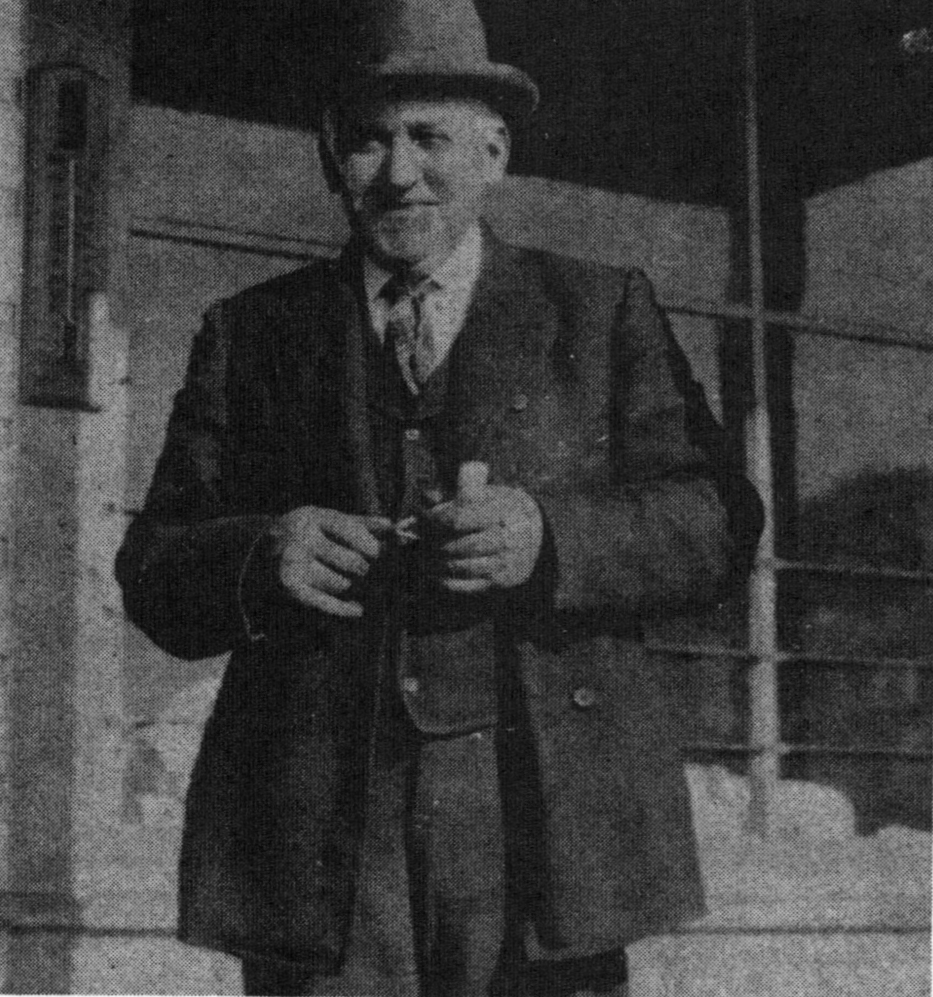
from E. A. Harris, Spokeshute
The noblest rivers in all the world are in our fair Dominion, and in many respects the noblest of all Canadian rivers is the majestic and mysterious Skeena. It owes this supremacy not to its length, for it is only a little over three hundred and thirty miles long, nor to its width, for it is barely three miles wide where it debouches into the Pacific; but it has an imposing and royal mien, and its stupendous environment of forbidding mountains, with the vastness and volume of its swift waters, makes it well nigh unique.
To the traveller, on the voyage up from the Gulf, the mighty St. Lawrence appears more like an arm of the sea than a river, fifteen to seventy miles in width, and the glaciated Laurentian heights on either bank intensify the impression. The colossal Mackenzie, two thousand five hundred miles long, and its delta, over fifty miles in width, convey no single impression; while the Great Saskatchewan, as it sweeps into Lake Winnipeg, after its long course of twelve hundred miles, yields mainly a sense of greatness lost in loneliness,—its low wooded banks and waste of silent waters below the Grand Rapids increasing the aspect of melancholy.
The Fraser, most famous of salmon streams, dissipates its yellow flood in gravel shallows, between low reedy sandbanks, destitute of all picturesqueness, and calm after its tempestuous rush through three hundred miles of wild craggy canyons. But the Skeena moves like a proud queen between her giant guard of frowning heights, whose scarred precipices shelter green glaciers and shining fields of snow, and whose foothills are studded with stupendous poplars, pines and larch.
Pines, pines, and the shadow of pines
As far as the eye could see.
“Sublimity,” in truth, is the only term applicable to the Skeena, amidst her impressive scenic environment. Through what a colossal portal the salmon-laden stream pours into the sea! From far-off Babine lake, two thousand five hundred feet above sea-level, the emerald Skeena speeds her course, through the frightful chasms of the Kitsalas canyon, in which more than one Hudson Bay stern-wheeler has been dashed to fragments, past Hazelton, for a hundred years a solitary trading post, by many a strange Indian village, and by the little-traversed Kispiox, the fruitful Bulkeley, and the Kitsumgallum, Kultwa, and Lakelse valleys, the adjacent overhanging mountains, for over half of the Skeena’s three hundred and thirty-five miles, threatening to close their jaws upon the fleeing terrified stream.
Here, on Christmas Day, sixty-four years ago, Robert Cunningham came to teach the Tsimpseans the white man’s faith. A tall stalwart Irishman, with clear blue eyes, a ruddy beaming countenance, a shrill cheery voice and irrepressible energy, he rapidly realized that there were earthly as well as heavenly treasures to challenge his powers. The vast timber and mineral resources of the Skeena, the little-developed fur trade, the boundless salmon supply, overmastered him. Laying aside the preacher’s sombre garb, he became a pioneer in commerce, a builder of towns, the father of the Indian tribes—the veritable King of the Skeena. It could be said of him, as Dr. Johnson said of his medical friend:-
The busy day, the peaceful night,
Unfelt, uncounted, glided by;
His frame was firm, his powers were bright
Though now his seventieth year was nigh.
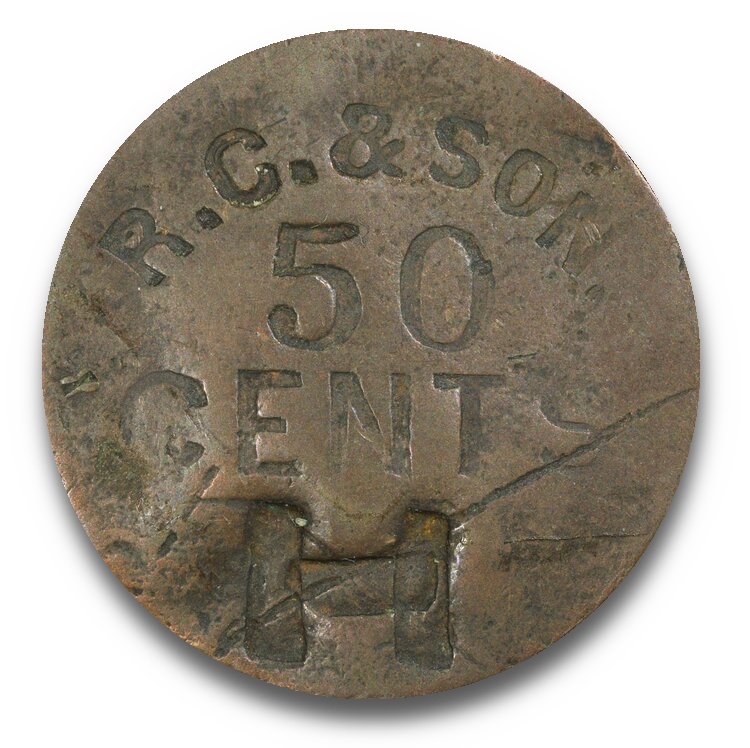
He was a son of Tyrone, born at Tullyvalley on New Year’s day, 1837, and his first years when he was a preacher were spent with William Duncan, the famous missionary to the Pacific Indians. A few years later he became an officer of the Hudson Bay Company; but in 1869 he opened a business store of his own, in partnership with Thomas Hankin, a young Englishman, and soon did a large trade at Woodcock’s Landing, now known as Inverness, North Passage, Skeena River. Across the wide river was Spok-sut, a great resort for the Indian tribes, and better known by the name which George Vancouver bestowed, in honour of his friend Admiral Sir William Essington of the Royal Navy. Thither Robert Cunningham moved, and two years later he pre-empted the whole town-site.
His energy and enterprise made Port Essington a centre of North Pacific commerce. Lumber mills, salmon canneries, fur marts, hotels and stores arose, and Robert Cunningham was master of all. He was the Skeena’s lumberman, salmon canner, fur trader, hotel proprietor, banker, house-builder, church leader, and friend of all, white and red alike. Whatever his faults, he was supremely a man of his word. He never deceived an Indian, or, for that matter, a white man. Men of twenty different native tribes came to have infinite trust in Robert Cunningham. Many an Indian from the remote “Stick” country, above the canyons, brought his fox skins, his mink and bear, from the coast his sea-otter and fur seal, and throwing them down on the floor of Cunningham’s store would ask to know their value. “They’re worth so many dollars- a hundred dollars, or a hundred and fifty,” the Tyhee white man would say. “Do you want money or flour, or other goods?” “No, Mr. Cunningham, I’m off to the Fraser to fish, and cannot wait. Pay me sometime—not now,” was the reply of the Siwash. Metal tokens, stamped with various values, were sometimes given to the Indian hunter; but the supply of these often ran out, and tearing off a card or a corner of strong wrapping paper from a bale of cotton or cloth, Robert Cunningham would write on it the value and date. Seizing this eagerly, the Indian would hurry down the beach to his canoe, pushing the precious piece of paper inside his marmot vest. Such fragments of card or paper were often not brought back for months, or even years. Sometimes they were soiled and begrimed, worn to tatters, and quite illegible when brought back, but no Indian ever questioned that it would be redeemable, or ever doubted Robert Cunningham’s word. However greasy and blackened, through contact with the Indian’s skin for a whole summer or longer, these “promises to pay” were held to be as good as Bank of England notes. No Indian, on the other hand, ever tried deception in the historic general store at Port Essington, and Robert Cunningham’s word was as good as his bond. He was one who
. . . . If he rise to station of command,
Rises by open means; and there will stand
On honourable terms, or else retire,
And in himself possess his own desire;
Who comprehends his trust, and to the same
Keeps faithful with a singleness of aim.
A striking example of the confidence of the Indian may be quoted. In the early “sixties” a huge project was partially carried out for the construction of a telegraph with the object of reaching Europe from the Pacific by an overland wire along the Skeena, and through the Rockies. The “Collins Overland Telegraph Company”spent upwards of $3,000,000 on the scheme, and employed a large body of Indians to carry great supplies of wire up the canyons. When the completion of the second Atlantic Sub-marine Cable was announced, the work on the Skeena was abandoned, and to this day vast quantities of valuable wire lie in the forest jungles of the upper Skeena. Payment to the Indians was arranged by means of new dollar bills from Ottawa. But, to the surprise of the wage-clerk, the Indians refused to accept them. “Those no good may be we won’t take them,” they said. “But these notes are from the Government, and that picture on them is the Governor- General,” declared the clerk. “May be that’s so–Indian doesn’t know. Likely no good. Indian won’t take them” they repeated,- “but we’ll take Mr. Cunningham’s money.” The telegraph contractors had no alternative but to get supplies of brass tokens from Robert Cunningham. These were paid to them instead of Canadian Government money, and the Indians were then perfectly satisfied. Such was their faith in the King of the Skeena.
The British Columbia coast is dotted with Indian villages, each consisting of a few wooden houses supported on massive piles overhanging the water, occasionally beautified with lofty totem poles, grotesquely carved and often gorgeously decorated, as at Alert Bay or Oweekano Lake. So diverse are the local dialects that almost each community speaks a distinct tongue, so distinct indeed that the Indians of one village could not converse with those of another village, were it not that there is a widespread use of “Chinook”—the jargon of the trading posts. To Robert Cunningham a mastery of Chinook was not sufficient. With characteristic determination he learned the native languages, and was able to speak nearly a score Siwash tongues, even the little-known tongues of the “Stick” Indians, in the upper regions far from the sea. At native marriage-feasts, baptisms, and funerals, and even at “Potlatches” and “Tyhee celebrations” or chieftain’s festivals, visiting Indians speaking in their own strange tongues would ask Robert Cunningham to interpret their orations to the “other brothers.” When “Sticks” and “Haidas” and Kitimats, Nootkas and Nawhittis, met Naas and Skeena Tsimpseans on convivial or ceremonial occasions. Robert Cunningham could always be relied upon to tell the local tribes what their brothers from afar had said.
When in the spring of 1905 a serious illness assailed him, and his ruddy, almost rustic, countenance became pallid, and his tall erect figure somewhat bent, although his fresh shrill loud voice lost none of its force, he was persuaded to make the trip, nearly five hundred miles, to Victoria for medical treatment. He was fond of Indian foods, especially the rich evil-smelling oolachan oil, an open cask of which scented the air near the large public hall at Port Essington, and he could never pass it without dipping in a finger and tasting the savoury, or rather the emphatically unsavoury, liquid, declaring “I swear to my God that’s good.” Every morning, for many weeks, when I sat down to breakfast with Robert Cunningham in his hotel, a large dish, piled five or six inches high with boiled oolachan, was placed opposite him, and I was invited to try them. The fish are small, about the size of smelt, and similar in shape and silvery appearance, but I felt a slight repugnance at my first mouthful. They had a slight flavour of whale oil, but the meat was delicate and white. I soon learned to enjoy them thoroughly, and a large dishful soon disappeared when the “chief” and I combined our efforts! Salmon, the chief dish on the Skeena, bacon, eggs “in all styles”, and other hotel dainties, were religiously ignored when “oolachan” were procurable. To swallow the first oyster on the shell is repulsive to most people, but repugnance usually soon gives place to eager desire. It is precisely so with the rich and nutritious oolachan.
This is often called the “Candlefish”, and it abounds at certain seasons in the Naas and other north Pacific rivers. It is so rich in oil that the Indians are accustomed to apply a light to the tail of the dried fish, and use it as a torch. Hence the name is very appropriate. As one of his special table jokes Robert Cunningham used to tell of a lanky emaciated American visitor who so improved by a daily dish of these fish, while making a six weeks’ stay in the hotel, that Cunningham declared the front entrance had to be widened considerably to let him out when he departed for his home in the United States! After he had been under surgical treatment for some time in the city hospital, Victoria, and forbidden to move about, he contrived one day to evade the vigilance of his nurse, and wandered into busy Government Street. It was a sunny April morning, and all the rank and fashion of the very aristocratic Pacific capital crowded this main thoroughfare. Robert Cunningham’s tall figure and uncouth bearing drew much attention, above all when he happened to espy a friend on the opposite side of the street. “Oolachan—a dish of oolachan, my good friend”, he yelled in shrill Celtic tones! The fashionable ladies and their faultlessly attired escorts gave ample sea-room to the wild Irishman from the North—the King of the Skeena—as he uttered this unfamiliar morning salutation. Robert Cunningham’s evasion of hospital rules cost him his life. The body, a few days after, was conveyed north to his beloved Skeena, where practically his whole life had been spent, and where he had reigned as king.
Great preparations were in progress for an impressive funeral at Metlakatla, a short distance from the mouth of the Skeena, where a fine church, almost of cathedral dimensions, had been built in 1862. Adjacent to it is a spacious consecrated cemetery. At Port Essington there was only an Indian cemetery, situated upon a rocky eminence overlooking the group of native houses, the original houses of Spok-sut. The Bishop of Caledonia had arrived in time for the funeral, and a considerable number of clergy, Hudson Bay Company officers, and old Cassiar pioneers, and an imposing procession was being arranged. But it was not to be. The mist hung low over the broad waters of the majestic Skeena, and over the extensive Metlakatla lagoons, on the funeral morning. Like noiseless shadows hundreds of Indians, in their graceful high-prowed canoes, came gliding with ghostly stealth from every village along the coast. They had paddled, with their “klootch- men” (wives) and children and dogs, from distant Indian settlements during the night, or it may be several nights. How the news had travelled so quickly, the white man had to confess he could not understand. For never had such a vast fleet of these wonderful Pacific canoes assembled on the British Columbia sea-board before. Under the bright April sun the veil of mist melted away; and as the body of Robert Cunningham was borne from the big white steamer to the church, the canoes with their picturesque crews clad in precious Thlinket blankets and other quaint guise closed in, in a great semi-circle, and silently moved inshore. The canoes were then drawn up side by side in a long black crescent upon the beach, and the Indians gathered round the corpse. There were Indians from the Nasse, the upper and lower Skeena, Port Simpson, Kitimat, Bella Coola and Alert Bay, tall Haidas from Queen Charlotte Islands, and others even from Mission, on the Fraser, as well as from Namu and Nootka, and Quatsino, Kyuoquot and Sooke. When the clergy and the group of white residents prepared to move, in solemn order, to the church, the Indians raised a loud protest. “No! we will not have this funeral! Robert Cunningham was one of us”, they cried, “we will bury him. He shall not rest with your fathers, but amongst our own Tyhees, amongst our own departed chiefs.” It was like a rumble of thunder in the still air, for the Indians’ voices are sonorous and deep. It betokened storm. There was no alternative. These dark-skinned aborigines meant what they said: “He was one of us-he shall sleep with our departed chiefs.” The high-prowed canoes, large cedar “dug-outs”, recalling in elegant design the famous gondolas of Venice (gracefully curving out of the water at stern and bows), were soon gliding in long lines out to the open sea. On one of the largest of these the body of Robert Cunningham lay, the coffin covered by the Union Jack, and surrounded by wampum and curious Indian objects—strings of Haikwa or tusk shells, blue and yellow shawls, coronets of cedar fibre, and all other strange artistry of the tribes, Tsimpseans, Haidas, Kitkatlas, Nitinats, and many more distant peoples. Slowly the thin dark line moved out.
How silent the mirror-like water, and its colossal amphitheatre of mountains, and towering forest trees! How noiseless the long procession of shadowy canoes! Suddenly there burst forth the thunderous drumming of Indian musicians, beating on old-time instruments—the hollowed trunks of cedars, characteristic of Siwash harmony—while the noble sonorous chanting of the men’s voices rose, wave on wave of sound, like a swelling Gregorian chant of medieval monks. Nearly two thousand Indians joined in the sad chorus, but there was no vulgar crash of sound, only a rumbling murmur of farewell, like a dying roll of thunder amongst the mountains. So slowly did the ghostly procession move down the smooth glassy tide that the April sun began to sink behind the far-off ranges of Queen Charlotte Islands, and the white summits ‘of the Coast Rockies were suffused with crimson, and chrome, and violet. Still the solemn chorus rose and fell on the evening air. About the foot-hills, in the yawning gorges, and over the dark forest the gloom was gathering before the floating funeral bier of the King of the Skeena was lost in the blue evening mist. Into the shadowy mist the weird procession of canoes passed, while the distant chanting and the solemn booming of the Indian drums died away in the night. Such was the last voyage of the King of the Skeena!
Far away a sad mysterious music
Wailing from the mountains and the shore,
Burdened with a dark majestic secret,
Softly soaring heavenward evermore.
A “majestic secret”, indeed, for only the Siwash Indian knows the place where the King of the Skeena sleeps!
◀
